You have 0 items in your cart
Smoked Beef Tenderloin Recipe

July 15, 2026
Leave a comment!
This post may contain affiliate links. View my privacy policy and disclosure policy for more details.
This Smoked Beef Tenderloin Recipe is an easy way to make a tender, juicy, smoky main course that’s perfect for holidays, dinner parties, and other special occasions. It looks like a restaurant-quality meal, but the simple step-by-step instructions make it easy to pull off at home. If you love serving impressive meals without the stress, this recipe is for you. Be sure to check out my Prime Rib Roast recipe next!

Why You’ll Love This Smoked Beef Tenderloin Recipe
Yes, we all know that beef tenderloin is arguably the most tender meat EVER, but it can often lack that great flavor that something like a ribeye steak can give us. When you use my salt brine + smoke + reverse sear method, it’s a great way to get the best of both worlds.
If you have a smoker, you should definitely be using it for this cut of meat. I use a pellet smoker – the Traeger Wood Fired Pellet Grill to be exact. Ohmagerd that smoke flavor is unrivaled!! The Big Green Egg or any variation of that will do a great job as well.
Ingredients Notes
You only need a handful of simple ingredients to let the beef shine. Here’s what you’ll need and why each one matters.
- Whole beef tenderloin – This is the star of the recipe, and buying it whole gives you the juiciest, most tender results while letting you trim it exactly how you like.
- Coarse kosher salt – Optional, but dry-brining the beef with kosher salt helps season it all the way through and gives you an even better crust.
- Olive oil – A light coating helps the seasoning stick to the beef and encourages beautiful browning as it cooks.
- Dry rub – Use your favorite beef seasoning or dry rub to add plenty of flavor without overpowering the tenderloin itself.
How To Smoke a Beef Tenderloin
Smoking a large, expensive cut of meat like beef tenderloin can be daunting. I’ve taken the guesswork out of the equation, so you don’t need to be intimidated!! It’s so easy when you use my step-by-step instructions. The great thing about smokers is that the cooking process itself is pretty hands-off.
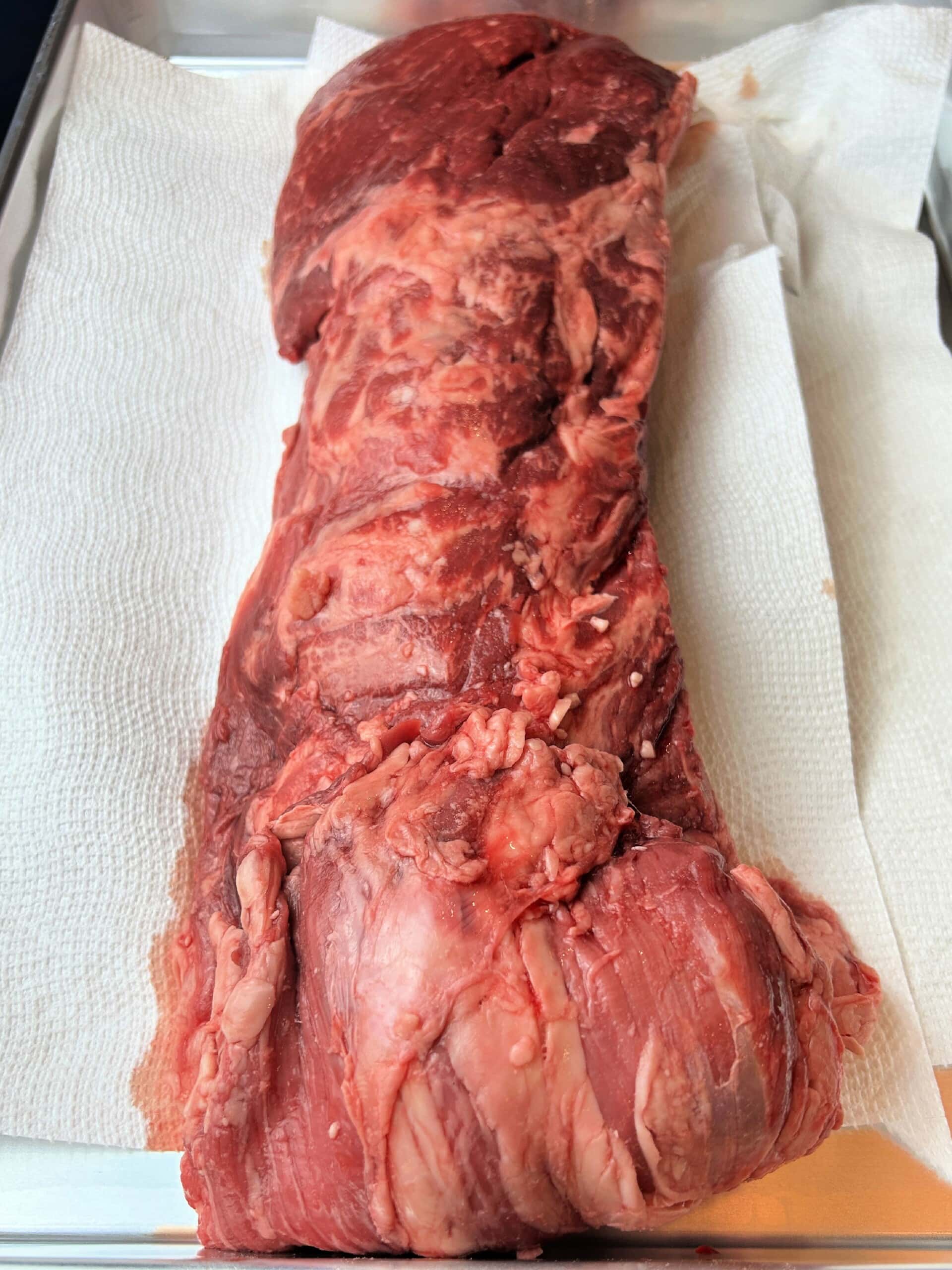
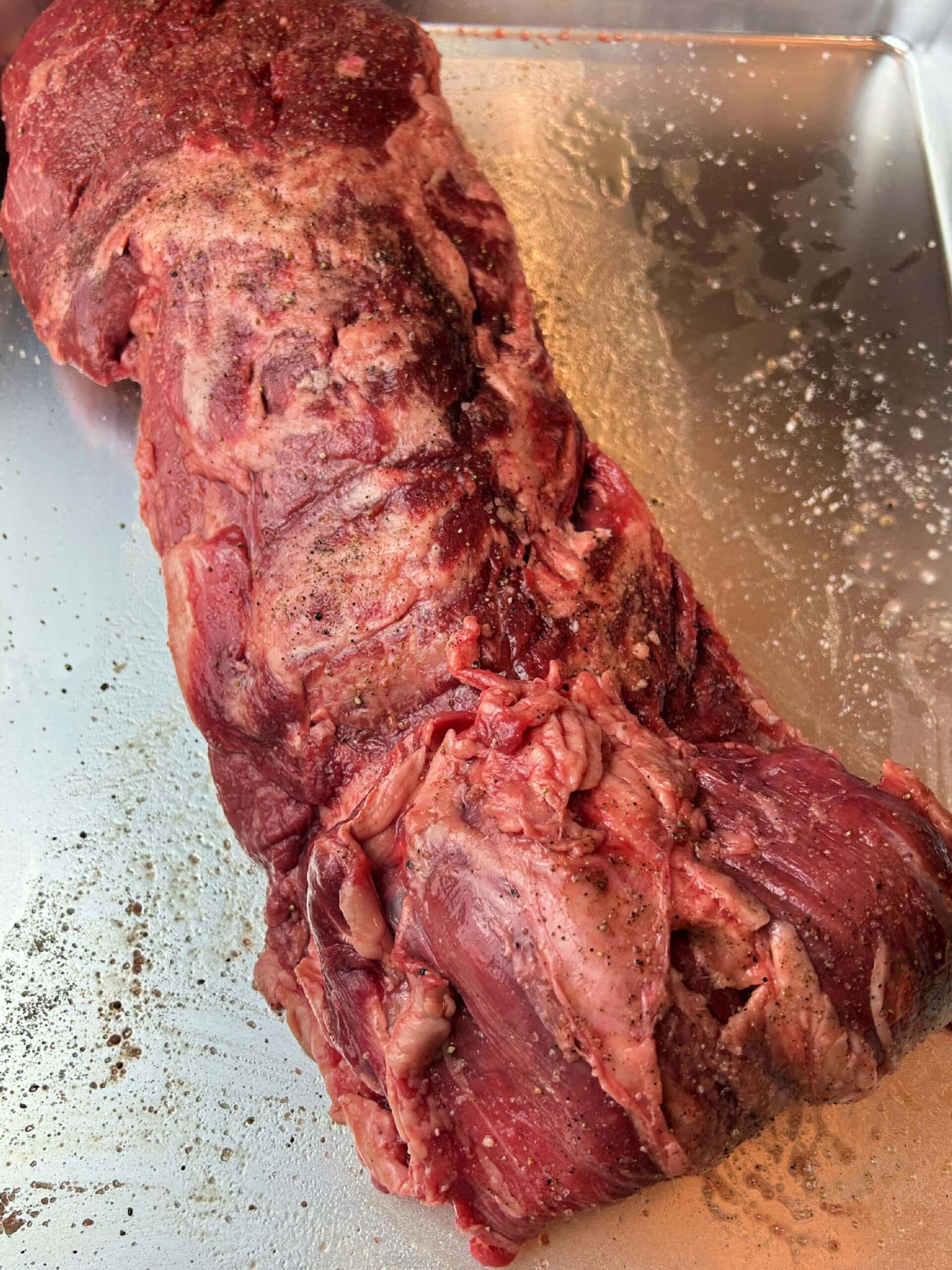
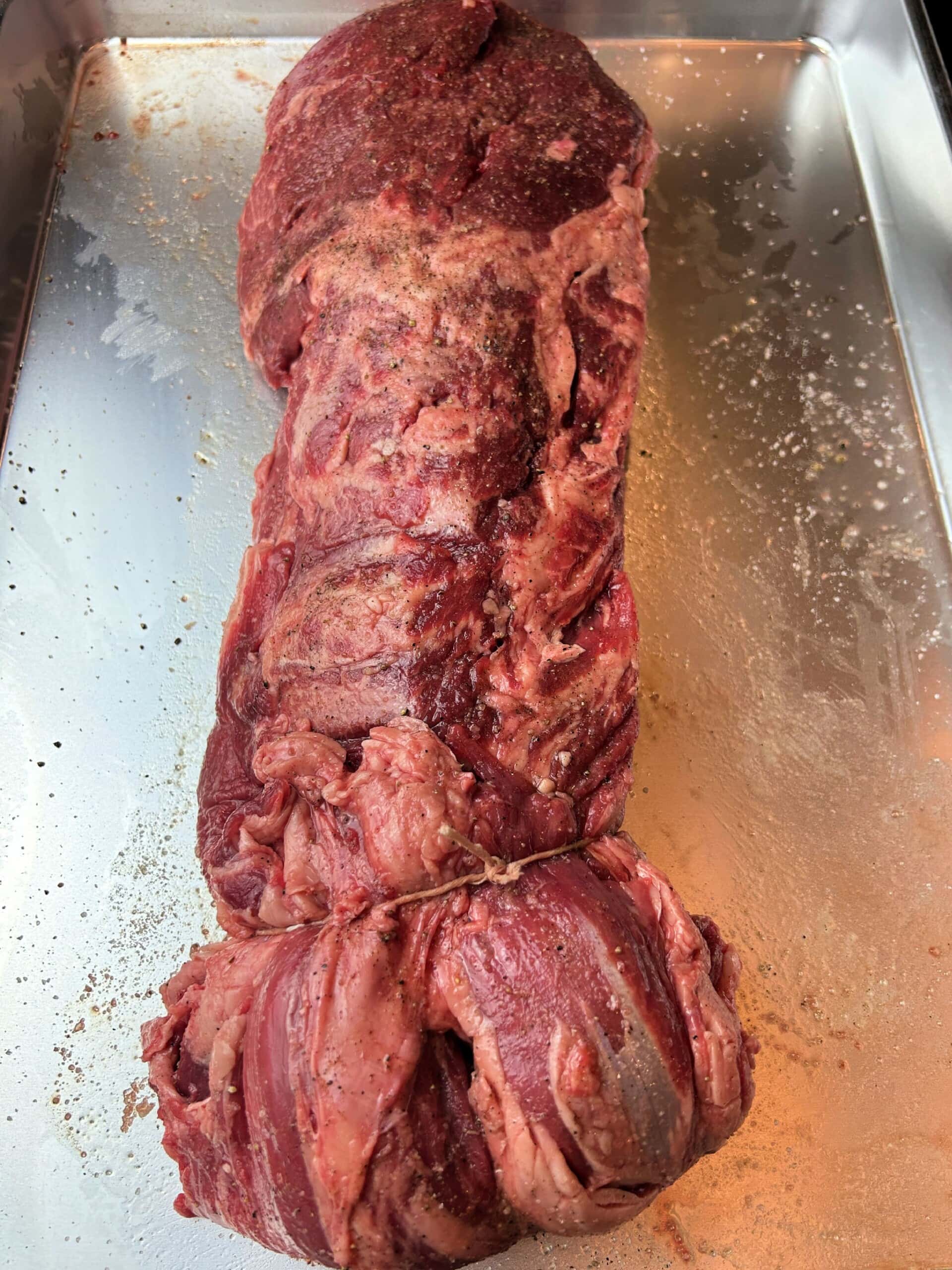
Step 1: Dry Brine Your Beef Tenderloin
This step is totally optional, but if you have the time, I say go for it! A dry-brined beef tenderloin is what will give you the most bang for your flavorful meat buck!! Anywhere from 24-36 hours before you want to begin smoking your meat, sprinkle all sides generously with coarse Kosher salt and place in the fridge uncovered. Your results will be a juicy, fully seasoned steak.
Step 2: Prepare Your Beef Tenderloin
- Remove (hopefully brined) beef from refrigerator to come to room temperature.
- Truss the beef tenderloin by tucking the thin pointy “tail” part of the tenderloin underneath itself and tying with butcher’s twine. You can continue trussing the entire length of the tenderloin to keep its shape if you wish, but I find that’s unnecessary. As long as the beef tenderloin is relatively the same thickness throughout, you should be fine with just adjusting the thin bottom portion instead of tying the whole tenderloin.
- Preheat smoker to 225° F according to your smoker’s directions.
- Pat the beef dry with paper towels, brush with olive oil, and season with a salt-free seasoning of choice if you brined it. Most of the time, I just add black pepper (and sometimes a little garlic powder), but feel free to use whatever dry rub or seasoning you love. Just make sure it doesn’t have salt. We are fully seasoned with salt here already! If you did not brine your beef, go ahead and salt generously.
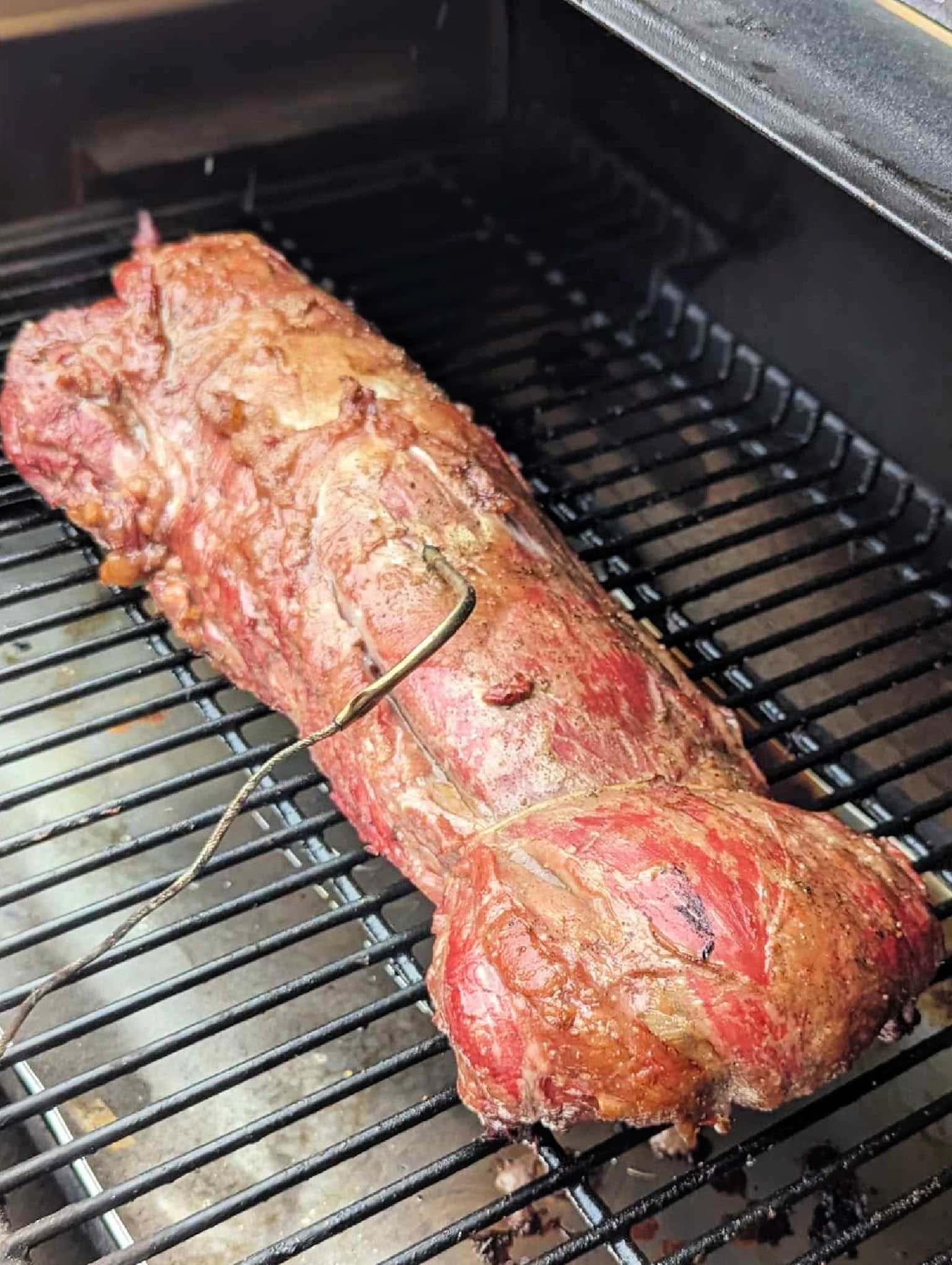
Step 3: Smoking Process For Beef Tenderloin Roast
- Place beef directly on the grill grate and insert your smoker’s meat thermometer probe in the thickest part of the beef.
- Smoke for approximately 15 minutes per pound or until the internal temperature of the meat reaches 120° F for a rare center. Smoke longer for a more done steak.
- If you are reverse searing your meat (next step), remove it when the temperature is around 110-115° so it doesn’t overcook during this step.
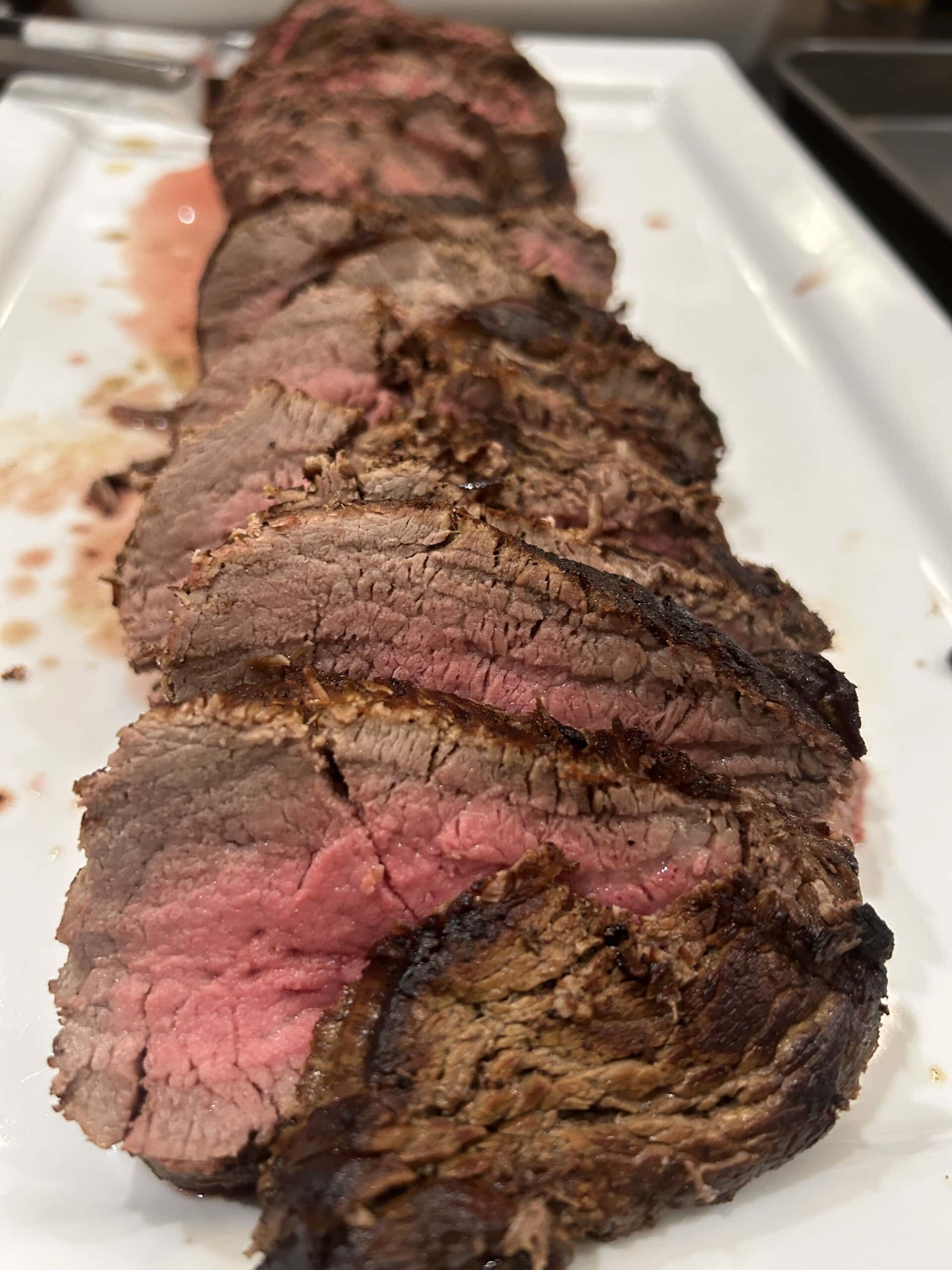
- Most of my family prefers a medium rare to medium filet mignon, so I smoked it until the temperature was about 125°. The center of the tenderloin was still a nice medium rare, while the ends were more of a medium, which suited everyone well.
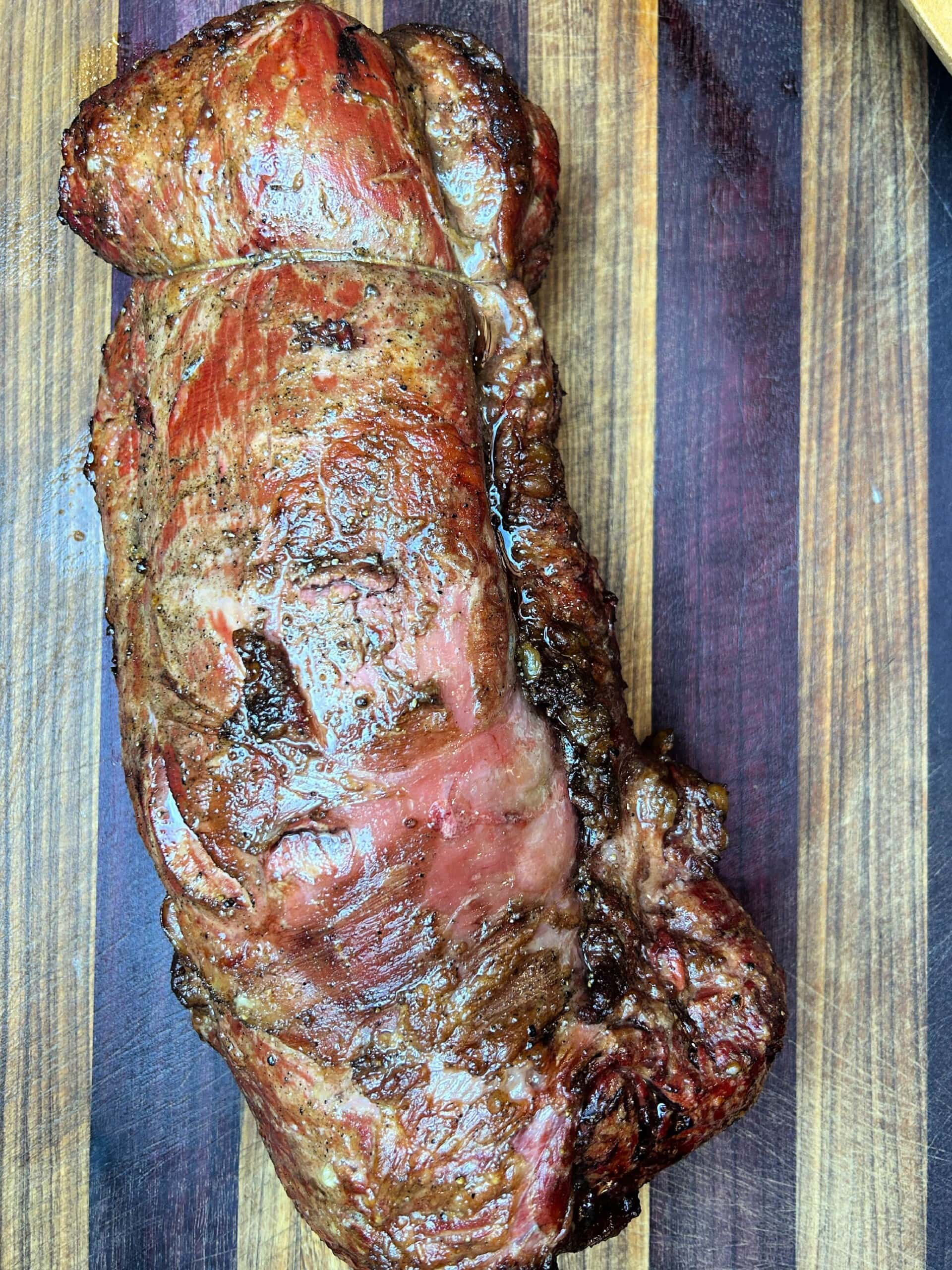
- OPTIONAL – Remove meat from smoker and reverse sear on high heat using a gas grill, flat top grill, cast iron skillet on stovetop, or in the oven under the broiler. This step is optional, but it will create a nice crust.
- Wrap the meat in NON-COATED butcher paper or aluminum foil and let the meat rest for about 5-10 minutes or until the temperature reaches 125° F and juices are all redistributed.
- Unwrap meat, place on a cutting board, and slice into individual filet mignon steaks.
Pro Tip– To help with the “mathing”, a 7 pound tenderloin should smoke for 1 hour and 45 minutes (15 minutes per pound) to be cooked to RARE. Of course, every smoker runs differently, so just keep an eye on things after that 1 hour mark.
How Much Beef Tenderloin Per Person Do I Need?
To ensure everyone has enough meat at your dinner table, you’ll want to account for a HALF POUND per person (8 ounces each). I had several people to feed who were all big eaters – and we LIVE for leftovers, so I went ahead and bought a big 7-pound Prime Beef Tenderloin from Sam’s Club. You can find smaller ones in other grocery stores or meat markets if you don’t need that much.
To What Temperature Should I Cook Steak?
This depends on you and your guests. I have given you the method to cook your steak to a RARE temperature, but you can easily adjust this according to your preference by smoking your beef tenderloin longer or reverse searing more. Here’s a breakdown of the target temperature for the different levels of doneness.
- Rare: 120° to 125° F
- Medium Rare: 130° to 135° F
- Medium: 140° to 145° F
- Medium Well: 150° to 155° F
- Well-Done: 160° to 165° F
Tools You’ll Need
You don’t need much to make smoked beef tenderloin, but having the right tools makes the process easier and helps you cook it perfectly from start to finish.
- Smoker – A reliable smoker keeps a steady temperature so the beef cooks slowly and develops that rich, smoky flavor.
- Meat thermometer – This is the easiest way to know exactly when your beef tenderloin reaches your preferred doneness without overcooking it.
- Butcher paper – Wrapping the tenderloin in butcher paper helps retain moisture while still allowing the bark to stay intact.
- Chef’s knife – A sharp chef’s knife makes it easy to trim the tenderloin before cooking and slice it cleanly for serving.
Tips for Success
A few simple techniques can make the difference between a good smoked beef tenderloin and one that’s perfectly juicy, tender, and evenly cooked every time.
- Let the beef sit at room temperature for 30 to 45 minutes before smoking. This helps it cook more evenly from edge to center.
- Tie the tenderloin with butcher’s twine if it’s uneven in thickness. A uniform shape cooks more consistently and prevents the thinner ends from drying out.
- Season generously on all sides. Beef tenderloin is a mild cut, so don’t be afraid to use more seasoning than you think you need.
- Place the thicker end toward the hotter area of the smoker if your smoker has hot spots.
- Start checking the internal temperature early. Tenderloin cooks faster than larger beef roasts because it’s such a lean cut.
- Rest the meat for 10 to 15 minutes before slicing so the juices have time to redistribute.
- Slice against the grain using a sharp chef’s knife for the most tender bites.
- Pull the beef a few degrees before your target temperature. It will continue cooking as it rests, helping you avoid overcooking.
What to Serve With Beef Tenderloin
This is a fancy, crowd-pleasing main course, so you’ll want to stay on-brand and make the best of your best side dishes to go with beef tenderloin. Here are some of my favorite sides:
- Cheesecake is the perfect dessert to finish the meal.
- Remoulade Sauce, or just prepared horseradish or creamy horseradish sauce
- Twice Baked potatoes for a rich, comforting side.
- Fondant Potatoes if you’re serving this for a holiday or special occasion.
- Homemade Crescent Rolls + Roasted Garlic to soak up every last bite.
- Roasted Brussels Sprouts for a simple vegetable that complements the smoky beef.
- Wedge Salad to add a crisp, refreshing contrast.
- Sausage Stuffed Mushrooms for another hearty side that’s always a crowd favorite.
Storage and Reheating
Smoked beef tenderloin stores surprisingly well, making it great for leftovers the next day. Here’s the best way to keep it tender and juicy.
To store: Let the beef cool completely, then transfer it to an airtight container or wrap it tightly in foil. Refrigerate for up to 4 days.
To freeze: Wrap individual slices or the whole tenderloin tightly in plastic wrap, then a layer of foil, and freeze for up to 3 months. Thaw overnight in the refrigerator before reheating.
To reheat: Warm the beef gently in a 300°F oven, covered with foil and a splash of beef broth or butter to help keep it moist. Heat just until warmed through to avoid overcooking.
Smoked Beef Tenderloin FAQs
How much beef tenderloin per person do I need?
You’ll want to account for a HALF POUND of beef tenderloin per person (8 ounces each).
At what temperature do I smoke a beef tenderloin?
For best results, smoke beef tenderloin at 225° F. If you are in a hurry, you can crank it up to 250° F, but I wouldn’t go any higher than 300° F.
How long to smoke a beef tenderloin?
Smoke beef tenderloin for approximately 15 minutes per pound or until the final temperature of the meat reaches 120° F for a rare center. Pull it sooner if you plan on reverse-searing the meat. Keep it on longer for more well-done steaks.
Variations
This smoked beef tenderloin is easy to change up with a few simple ingredients.
- Garlic Herb: Mix garlic powder with dried rosemary, thyme, and parsley for a classic herb seasoning.
- Butter Finish: Brush the tenderloin with melted butter after it comes off the smoker for extra richness.
- Pepper Crusted: Add extra coarse black pepper to the seasoning for a bold, steakhouse-style crust.
- Spicy: Mix in a little cayenne pepper or chili powder for a bit of heat.
- BBQ Flavor: Brush on your favorite barbecue sauce during the last 10 to 15 minutes of cooking.
- Bacon Wrapped: Wrap the tenderloin with bacon before smoking for extra flavor and to help keep the meat juicy.
More Smoked Meat Recipes to Try!
- Smoked Pork Butt
- Smoked Chicken Wings
- Smoked Ribs
- Smoked Prime Rib Roast
- Smoked Beef Tenderloin
- Smoked Turkey
- Smoked Corned Beef
Smoked beef tenderloin is an easy way to make any meal feel extra special, and it’s sure to impress every time. When you’re ready to make it, you’ll find the printable recipe card just below!

Smoked Beef Tenderloin
Smoked Beef Tenderloin is MADE for a special occasion! This show stopping main course will wow your guests and they'll think you're some kind of master chef.
Equipment
- Smoker
- butcher paper optional
Ingredients
- 7 lb whole beef tenderloin I always grab PRIME (not Choice) beef
- 1/2 cup Kosher salt coarse
- 2 tbsp olive oil
- 2 tbsp seasoning of choice black pepper, garlic powder or salt-free seasoning blend
Instructions
for dry brine (optional, but seriously – do it!)
- Sprinkle all sides of meat generously with coarse Kosher salt and place in fridge uncovered for 24-36 hours.
prepare meat for smoking
- Remove beef from refrigerator to come to room temperature.
- Truss the beef tenderloin by tucking the thin pointy "tail" part of the tenderloin underneath itself and tying with butcher's twine.*
- Preheat smoker to 225° F according to your smoker's directions.
- Pat beef dry with paper towels, brush with olive oil and season with a salt-free seasoning of choice.**
smoking process
- Place beef directly on grill grate and insert your smoker's meat thermometer probe in the thickest part of the beef.
- Smoke for approximately 15 minutes per pound or until internal temperature of the meat reaches 120° F for a rare center.***
- OPTIONAL – Remove meat from smoker and reverse sear on high heat using a flame grill, flat top grill, cast iron skillet on stovetop, or in the oven under the broiler. This step is optional, but will create a nice crust.
- Wrap the meat in NON-COATED butcher paper or aluminum foil and let meat rest for about 5-10 minutes or until temperature reaches 125° F and juices are all redistributed.
- Unwrap meat, place on a cutting board and slice into individual filet mignon steaks.
Video
Notes
*You can continue trussing the entire length of the tenderloin to keep its shape if you wish, but I find that’s unnecessary. As long as the beef tenderloin is relatively the same thickness throughout, you should be fine with just adjusting the thin bottom portion instead of tying the whole tenderloin.
**Most of the time, I just add black pepper (and sometimes a little garlic powder) but feel free to use whatever dry rub or seasoning you love. Just make sure it doesn’t have salt. We are fully seasoned with salt here already!
***If you are reverse searing your meat (next step), remove when temperature is more around 110-115° so it doesn’t overcook during this step.
Nutrition
Calories: 752kcalCarbohydrates: 2gProtein: 48gFat: 60gSaturated Fat: 24gPolyunsaturated Fat: 3gMonounsaturated Fat: 26gCholesterol: 185mgSodium: 4846mgPotassium: 836mgFiber: 1gSugar: 0.1gVitamin A: 42IUVitamin C: 0.1mgCalcium: 61mgIron: 7mg
Rate This RecipePlease consider Leaving a 5-Star Review!
If you make this recipe, I would really appreciate it if you would give it a star rating and leave your review in the comments! If you have a picture of your finished dish, post it on Instagram using the hashtag #laurenslatest and tag me @laurens_latest.